Venezuela and the United States: Primary Problems Clarified
Venezuela is a South American nation, which is situated on the northern coast of the continent. It is endowed with natural resources particularly oil and has the biggest proven oil deposits in the globe. In spite of this prosperity, Venezuela has experienced severe political, economic, and social issues over a long period of time.
This paper describes the principal cases between the United States and Venezuela and also clears up a critical aspect concerning the allegations that the Venezuelan president was kidnapped.
Background of Venezuela Crisis.
The modern issues in Venezuela started increasing towards the end of 1990s as Hugo Chavez rose to power with a socialist regime known as the bolivarian revolution. His government:
State owned oil and large sectors.
Less company control by the U.S. and foreign companies.
Established warm ties with such nations as Cuba, Russia, China, and Iran.
Nicolas Maduro took over as president following the death of Chavez in 2013. During his rule, Venezuela has witnessed:
Severe economic collapse
The loss of value of money (hyperinflation)
Food, medicine and fuel shortage.
Massive migration, loss of millions of people.
The causes of the conflict between the United States and Venezuela.
Differences in politics and ideologies.
The U.S is highly critical of the socialist administration in Venezuela. Washington charges Maduro administration with:
Authoritarian rule
Feeble democracy and contentious elections.
Human rights violations
In its turn, the Venezuelan government charges the U.S. with the attempt to dominate Latin America and to dethrone leaders of Latin American countries.
Oil and Economic Interests
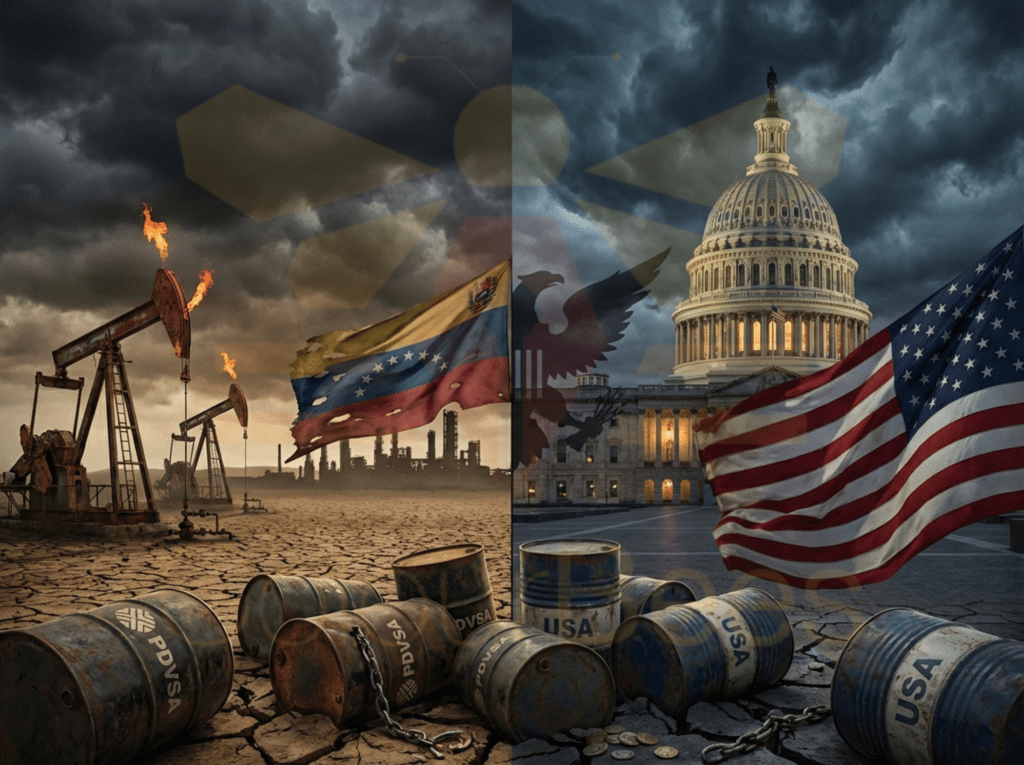
Oil is the core issue.
The economy of Venezuela relies on oil exports.
Venezuela used to be one of the largest oil purchasers by the U.S.
Economic sanctions were imposed by the US after political tensions had escalated.
These sanctions:
Restricted oil sales
Froze Venezuelan assets
Poor access to international banking.
The U.S claims that sanctions compel the government to reestablish democracy. Venezuela complains that the sanctions have increased misery among the common folk.
International Pressure and Sanctions.
The U.S. has imposed very severe sanctions on the Venezuelan officials and state companies since 2017. In 2019, the U.S. recognized an opposition leader by the name of Juan Guaido as the interim president replacing Maduro.
This led to:
A deep diplomatic break
No official ties between the two states.
Greater tension of the region.
Drug Trafficking.–There are allegations of drug trafficking directed against the company.
The U.S. has charged top officials of Venezuela including President Maduro with drug trafficking. In 2020, the U.S. prosecutors alleged criminal charges against him.
Venezuela refuted the charges and termed them as politically motivated.
Kidnapping of the Venezuelan President?
No.
The United States has never confirmed kidnapping or capturing the president of Venezuela.
There are false allegations that the U.S. kidnapped or arrested President Nicolas Maduro. Maduro is still in Venezuela and still in command of the government.
What did happen is:
The U.S. brought criminal charges and provided a reward on the types of information that can lead to his arrest.
The U.S. applied more political and economic pressure.
The military operations with the aim of capturing him were not successful.
Speeches of Venezuela frequently cite the term kidnapping or coup attempt to identify the actions of the U.S., which is political pressure, not literal arrest.
International Reaction
Certain nations are in favour of the U.S. stand and insist on democratic changes.
Some of them, such as Russia, China, Iran, and Cuba, demonstrate solidarity with Venezuela and are against U.S. sanctions.
The United Nations has demanded peaceful dialogue on many occasions.
Why This Conflict Matters
The Venezuela- U.S. dispute influences:
Global oil markets
Stability in Latin America
Sanctions, sovereignty and human rights at the international level.
Millions of civil populations in Venezuela.
Conclusion
Venezuela is a South American oil-rich nation that is undergoing a long-term political and economic crisis. Ideology, oil control, sanctions, democracy and power issues are the major concerns of the United States in the region.
At same time as the U.S. charges the leadership of Venezuela with corruption and crime, Venezuela charges the U.S with interference and economic warfare. There are no facts that the U.S. kidnapped the Venezuelan president; it is a political speech and misinformation.
The stalemate is still present, and the future of Venezuela is not in a war but in dialogue, changes, and collaboration with other countries.