


JF-17 Thunder is a multi-purpose, all weather fighter which is light and is being co-produced by the Pakistan aeronautical complex (PAC), and the China Chengdu aircraft corporation (CAC).
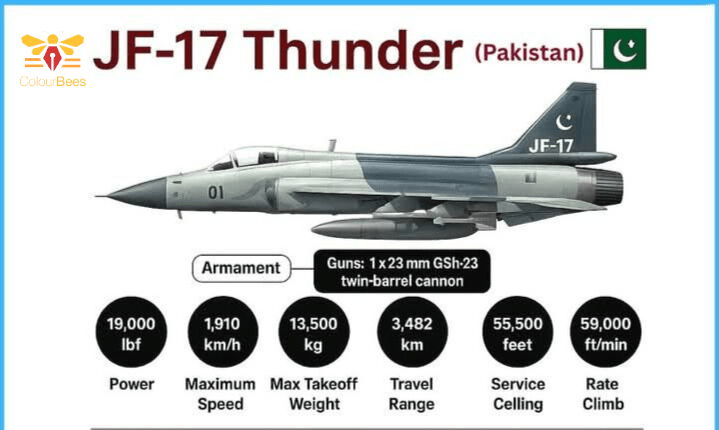
JF-17 Thunder aircraft was designed by entering into a contract between Pakistan and China in late 1990s, and the real work began in early 2000s at the PAC in Kamra, in Pakistan in the Punjab province within a distance of less than 80km (50 miles) of Pakistani capital, Islamabad.
One air commodore of Pakistan Air Force who was closely involved in the programme has indicated that half the production is carried out in both countries since 58 percent is carried out in Pakistan and 42 percent in China.
We are manufacturing the front fuselage and the vertical tail, and China is manufacturing the middle and the back fuselage of the aircraft and the seats in the plane are the martin baker seats which are manufactured by the British manufacturer Martin Baker. However, the whole plane assembling process is assembled in Pakistan, he informed Al Jazeera though under anonymity due to the involvement in the project.
What is Pakistan’s main reason for supplying JF-17 jets?
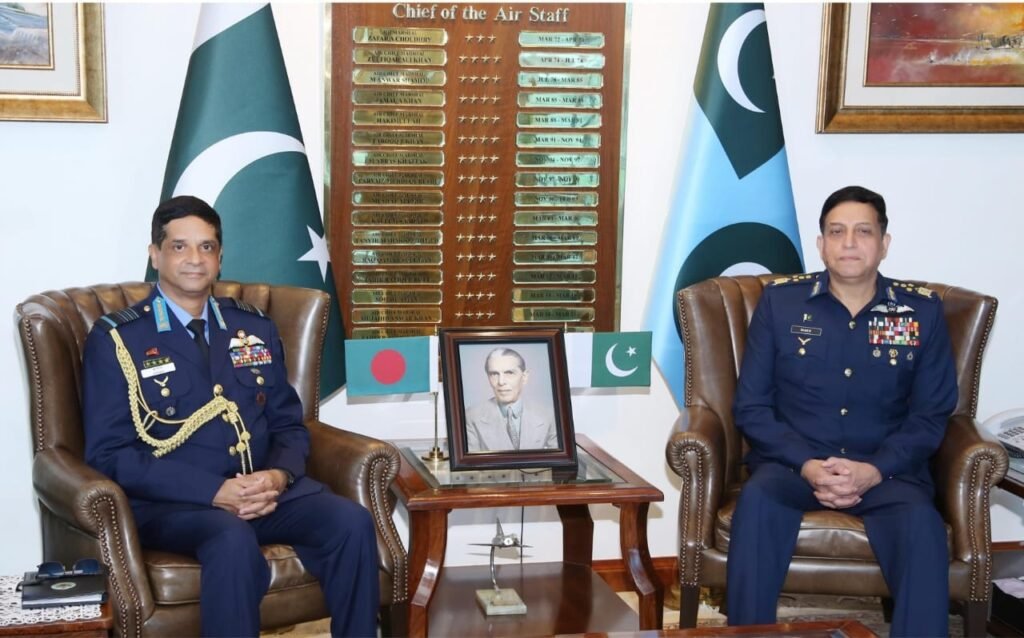
Under a month in the new year following an interview between the Air Chief Marshal Zaheer Ahmed Babar Sidhu of Pakistan and his Bangladeshi counterpart, Air Chief Marshal Hasan Mahmood Khan, Pakistan military said it could soon conclude a contract to sell its domestically-manufactured JF-17 Thunder fighter jet.
In a statement given by the military media wing, the Inter-Services Public Relations (ISPR) Khan expressed admiration over Pakistani Air Force fighting history and asked the assistance to support fighter fleet Bangladesh Air Force and incorporation of air defence radar to enhance air surveillance.
Combined with the promise of a faster delivery of Super Mushshak trainer airplanes, the statement, issued on January 6, also indicated that they had also negotiated on issues pertaining to potential purchase of JF-17 Thunder airplanes.
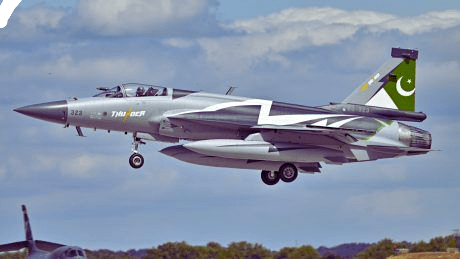
The Super Mushshak represents a two to three seater, light weight, single engine airplane where the landing gear is fixed and non-retractable, tricycle landing gears. The airplane is mainly used as a training plane. Moreover, Pakistan is not the only country that has begun to use the plane in its airline fleet to train pilots, with other countries such as Azerbaijan, Turkiye, Iran, Iraq, and others also following suit.
Only a day later, the Reuters news agency announced that Pakistan and Saudi Arabia were talking about converting about 2bn Saudi loan into a JF-17 fighter jet deal, and once again cemented military co-operation between the two old time allies. The negotiations come months after they signed a mutual defence agreement in September last year.
The two weapons were announced following in late December, when Pakistan had signed a $4bn deal with another rebel faction in Libya, the self-proclaimed Libyan National Army (LNA) which involves selling more than a dozen JF-17 Thunder jets.
Even though the Pakistani army has not yet officially claimed any agreement with Libya or even Saudi Arabia and even the Bangladesh have only expressed an interest but not a contract, analysts assume that the situations in 2025 have made the JF-17 more popular.
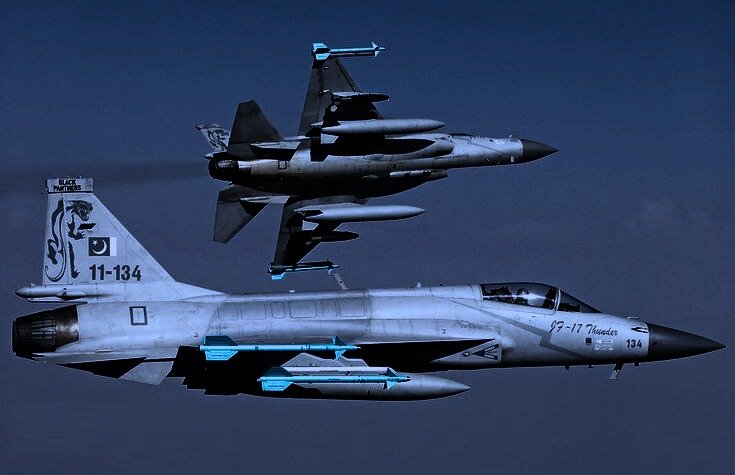
However, the relatively low price of the aircraft worth approximately 25m-30m has seen many countries in the last decade show interest in it with Nigeria, Myanmar and Azerbaijan already acquiring the jet in their fleet. And it is the recent events that have rendered credence to the air fighting capability of Pakistan, as analysts believe.
Read Also : Venezuela–U.S Crisis
In May, India and Pakistan had lunch counter four days of intense air combat, firing missiles and drones at their respective territories, military bases, following the killing of 26 Indian-controlled civilians in Kashmir by gunmen. India accused Pakistan who denied any relationship with the attack.
The air battle saw Pakistan saying that they had shot down many Indian fighter jets and this was confirmed by the Indian leaders who had previously denied that any jets had been lost, however failing to mention how many jets had been lost.
The PAF has been much more efficient in dealing with much more expensive Western and Russian systems, and this has led to these aircrafts being an alluring acquisition by several airlines. Adil Sultan, a retired air commodore of the Pakistan Air Force said.
Pakistan, in its turn, deployed its newly acquired imports of Chinese J-10C Vigorous Dragon and the JF-17 Thunder as well as the F-16 Fighting Falcon jets of the United States in the formation with 42 planes against 72 IAF planes according to the PAF.
He says that the first aircraft was launched in the market in March 2007 and the first block (Block 1) was induced in 2009. The Block 3 version was put into service in 2020.
It was a concept to put to rest the ageing Pak fleet then in ten or so years they formed the bulk of our air force, we had more than 150 combat jets in the force.
Pakistan had been earlier dependent on French Mirage III and Mirage 5 by Dassault as well as Chinese J-7 fighter jet.
Block 3 model places JF-17 in the 4.5 generation fighter jets. It is air to air, air to land warfare capable, possesses state of the art avionics, Active Electronic Scanned Array (AESA) radar, electronic warfare and has a capability of firing beyond-visual-range missiles.
Their electronic capabilities and avionics are one upgrade over the fourth generation of the fighter aircraft i.e. F-16 and Su-27 that were primarily meant to be fast and dogfight.
The AESA radar will allow these aircrafts to be in a position to target a large number of targets at a time as well as provide a better visibility at a greater distance. They are not however the stealth planes like fifth generation planes.