

The Faces Behind the Ceasefire
The world was on the edge of its seat on April 7, 2026. The ultimatum delivered by U.S President Donald Trump was one of the most chilling in the history of the world – the threat to kill an entire civilization, not to be revived ever again, should Iran fail to comply with his demands. It was late. The week-long conflict between the United States, Israel and Iran had already cost thousands of lives, disrupted the energy supply systems of the world and threatened to plunge the whole of the Middle East into a catastrophe.
Then, in 90 minutes of the deadline imposed on himself by Trump, diplomacy got in the way. Not from Washington. Not of a traditional superpower. But from Islamabad.
And this is the tale of the men who arranged the ceasefire. The negotiators, mediators and diplomats who entered into one of the most hazardous geopolitical situations of the 21 st century – and rescued the world at the last moment.
But to begin with–what is a ceasefire?
What is a Ceasefire?
A ceasefire is an official agreement between conflicting parties – normally warring countries or military entities – to cease fighting either temporarily or permanently. It is also referred to as truce or armistice.
Ceasefire is not a peace treaty. Think of it as pressing the “pause” button on a war. It gives time – to negotiations, to humanitarian assistance to the civilian population, to the diplomats to negotiate a more lasting way out. The combat can be renewed in the case of the breach of the terms or the lack of a long-term agreement.
Why Are Ceasefires Called?
• To enable delivery of humanitarian assistance to civilians who are affected.
• To provide room to hold peace talks.
• To make prisoner exchange.
• To recover the dead from battlefields
• As a reaction to huge international pressure.
In the Iran-U.S. war, a two-week ceasefire was reached on April 8, 2026, negotiated by Pakistan, to enable the two countries to start face-to-face talks in Islamabad. The future of the Middle East will be determined by what will be the result of those negotiations.
The Keystone Players: Who and What?
JD Vance is the U.S. Vice President and Lead American Negotiator.
Who is JD Vance?
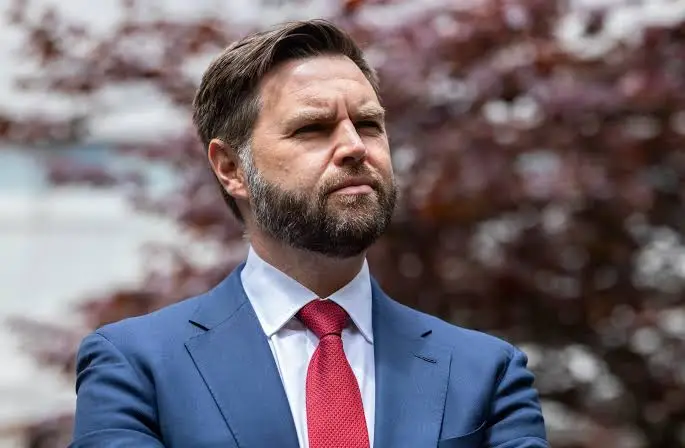
James David Vance (born 1984, Middletown, Ohio) is the 50th Vice President of the United States of President Donald Trump. Prior to becoming a politician, he was a veteran of the U.S. Marine Corps, who served in Iraq in 2003, which was a formative experience that made him so skeptical of foreign military interventions. He went on to be a bestselling author (Hillbilly Elegy), a venture capitalist, and a U.S. Senator representing Ohio prior to being nominated as the running mate to Trump.
Vance is commonly regarded as the most prominent representative of the anti-interventionist wing of Trump Republicanism – a politician who made his brand based on the anti-forever wars in the Middle East. And it was all the more unexpected–and, indeed, the more momentous–when Trump selected him as the U.S. ambassador in the most delicate diplomatic task of the administration.
What is his contribution to the negotiations?
Vance has become the most important American in the ceasefire diplomacy. White House press secretary Karoline Leavitt said that he was a key participant in negotiations at the very outset. Trump himself, making a joke that he would fault JD Vance in case of a collapse in the negotiations, affirmed that Vance was one of the chief American negotiators, along with Secretary of State Marco Rubio.
On April 10, 2026, Vance traveled to Islamabad, Pakistan, on Air Force Two to host the first face-to-face, in-person discussions between the U.S. and Iran. This, legal experts observed, was a historically unusual event, with one expert, Professor Joel Goldstein of Saint Louis University, saying that he could not remember a single instance of a vice president being dispatched to negotiate a ceasefire or peace in relation to a war in which the United States had any interest.
Why Vance?
The preference of Iran itself to negotiate with Vance rather than with other U.S. officials such as Steve Witkoff or Jared Kushner was reportedly based on this. Analysts attribute this choice to two factors: Vance had previously been on record as disagreeing internally with the war, and he had not been part of the previous nuclear negotiations with which Iran held a strong dose of suspicion. According to CNN, the Iranians believed that Vance was more receptive to the termination of the war than other Americans.
The anti-war position of Vance makes him credible with Tehran – and his loyalty to Trump makes him dependable with Washington. It’s a rare diplomatic sweet spot. According to Curt Mills, an ally of Vance: This will be the most important moment, likely the largest moment of JD Vance as vice president.
The political stakes
The way Vance implements these negotiations may determine not only the course of the war – but his own political future. Having been widely considered as a 2028 Republican presidential nomination contender, a successful peace deal would solidify his legacy. The stakes were established by Trump himself, who told JD Vance that, should anything go wrong, he would be blaming him and that, should anything go right, he would take full credit.
2. Field Marshal Asim Munir -Pakistan Army Chief and the Master Broker.
Who is Asim Munir?
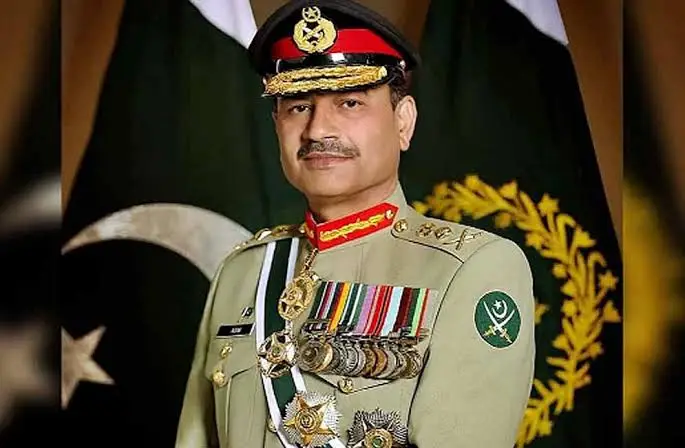
Asim Munir is the Pakistani Chief of Army Staff (COAS) and Chief of Defence Forces (CDF). He is among the strongest players in the Pakistani political and military arena – and arguably the only most critical figure in the negotiation of the April 2026 ceasefire.
As a career soldier who ascended the ranks in the Pakistan Army, Munir has developed an outstanding network of connections with people worldwide. He has forged personal relationships with U.S. President Trump (who has referred to him as my favorite field marshal), Vice President JD Vance (with whom he has developed a personal relationship at least in the eyes of Axios) and Chinese leadership, Saudi Arabia, and Iran. This was the cross-bloc position, which he was the best middleman.
What is his contribution in the negotiations?
Munir was the architect of the ceasefire diplomacy of Pakistan. He even spent all night in contact with the U.S. Vice President JD Vance, Special Envoy Steve Witkoff, and Iranian Foreign Minister Abbas Araghchi on the critical hours before the ceasefire was declared, according to Reuters.
Munir was directly credited by Trump himself in his ceasefire announcement on Truth Social, saying he accepted the suspension of bombing Iran after the conversations with the Pakistani Prime Minister Shehbaz Sharif and Field Marshal Asim Munir, who asked him to delay the destructive force being dispatched to Iran that night.
The Foreign Minister of Iran, Araghchi, followed suit by making special mention that both Sharif and Munir had worked tirelessly to bring an end to the war.
How did Pakistan tug this off?
Pakistan can mediate based on a distinctively well-balanced relationship. It has close relations with the United States (including assisting in evacuating American forces in Afghanistan in 2021), strong religious and cultural relations with Iran (they share a 560-mile long border and a long history), strong military relations with Saudi Arabia, and a friendship with China (all-weather). This saw the only country that could be trusted by both sides at the same time, being Islamabad.
According to Aqil Shah, a political scientist at Georgetown University, Pakistan was a pariah state during the Biden administration. The rise of Munir and Sharif as the White House interlocutors is an amazing geopolitical metamorphosis.
Munir had also dealt with domestic pressures during the mediation – the sectarian violence in Pakistan was suppressed as the Shia populations protested the war – and at the same time had to engage in frantic diplomacy in a variety of capitalas.
3. Shahbaz Sharif, the Prime Minister of Pakistan – the Diplomatic Face.
Who is Shahbaz Sharif?
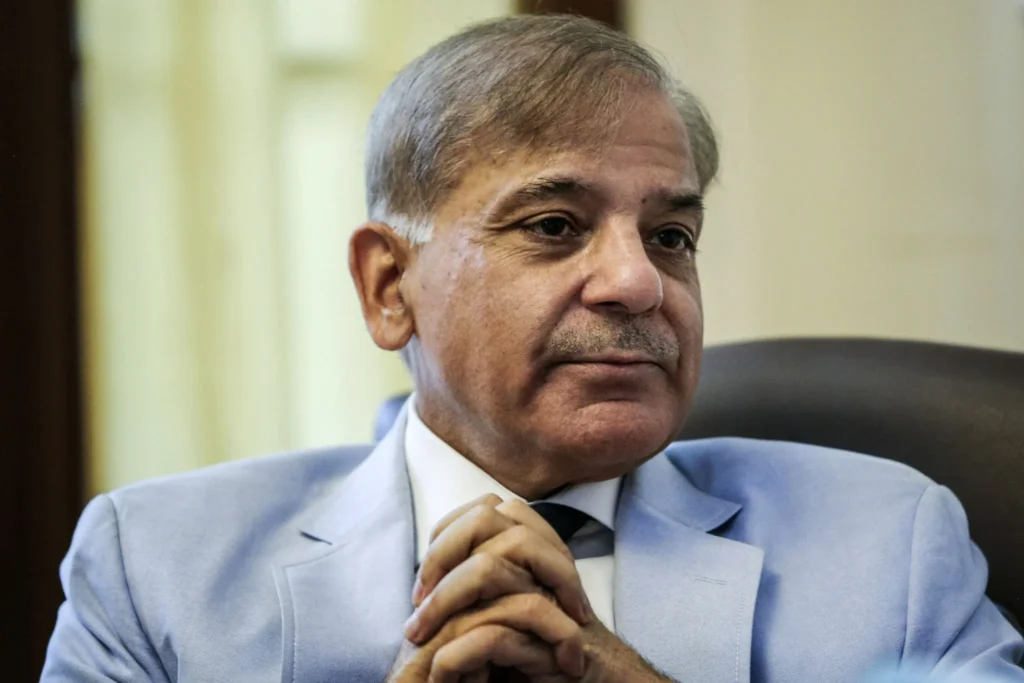
The Prime Minister of Pakistan is Mian Muhammad Shahbaz Sharif and the popular face of ceasefire diplomacy in Pakistan. Shahbaz, the younger brother of three time former Prime Minister Nawaz Sharif, has established himself as a pragmatist, deal maker politician with close connections with the Gulf states and the western governments.
What does he contribute to the negotiations?
Asim Munir was the back stage military and intelligence machine, and Shahbaz Sharif was the diplomatic face of Pakistan, the face that gave credence to the mediation process on the international front.
Shahbaz was the first to formally suggest Islamabad as a negotiating site, on March 23, publicly calling Trump, Araghchi, and Witkoff X. It was Shahbaz who issued the vital call on the populace to ceasefire on the night of April 7 – a call that, as reported by Bloomberg, led to a turnaround of the U.S. stocks as stock markets believed there was a breakthrough.
And it was Shahbaz who declared the ceasefire deal to the world, putting it on record that Iran, the U.S. and their allies have agreed to an immediate ceasefire everywhere including Lebanon and inviting both sides to Islamabad to follow-up negotiation.
In his ceasefire declaration, Trump himself recognized Sharif, stating that the discussions with him were a direct motivator to his decision to suspend strike. The episode was called by Pakistan Today the most important diplomatic success of Pakistan in years – and a reminder that, despite an age of confrontation and rivalry, the power of dialogue is invaluable.
________________________________________
4. Abbas Araghchi -the Foreign Minister and Head of Negotiations in Iran.
Who is Abbas Araghchi?
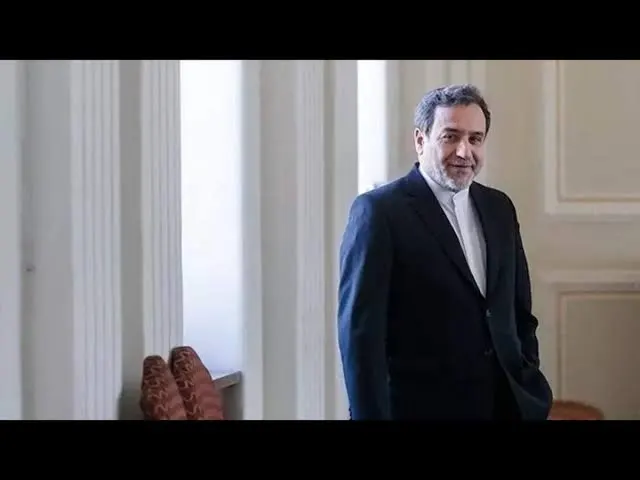
The country and the top diplomat of Iran is Seyyed Abbas Araghchi who was born in Tehran in 1962 and is the Foreign Minister of Iran. He is also among the most seasoned negotiators in the history of Iran- having been a part of the historic nuclear deal (JCPOA) talks as a deputy foreign minister, and currently heading the foreign policy of Iran at one of the most threatening conflicts the Islamic Republic has ever encountered.
Araghchi, a son of a carpet trader based in Isfahan, was part of the 1979 Islamic Revolution in Iran and participated in the 198088 Iran-Iraq War as a teenager and later became a diplomat. He is also a doctor of politics with the University of Kent in Britain, and was the ambassador to Finland and Japan before being appointed as a deputy foreign minister in 2013. In 2024, President Masoud Pezeshkian made him Foreign Minister.
Western diplomats who have transacted business with him say he is serious, technically knowledgeable and straightforward. In his 2024 book The Power of Negotiation, Araghchi explained that the negotiating style of Iran is the kind of bazaar-style — “unrelenting and relentless arm-twisting.
What is his contribution to the negotiations?
Throughout the entire diplomatic process, Araghchi has been the main Iranian interlocutor, whether it is during the nuclear negotiations negotiated by Oman in April 2025 (along with U.S. Special Envoy Steve Witkoff), or the ceasefire negotiations brokered by Pakistan in April 2026.
He officially accepted the ceasefire by Iran, saying: “When the attacks on Iran are stopped, our Powerful Armed Forces will stop the defensive operations. He also affirmed that Iran would grant two-week safe passage through the Strait of Hormuz – a crucial compromise considering that Iran had closed the waterway, which triggered the oil prices in the world market and caused havoc in international business.
Among the few senior Iranian officials who were not on the Israeli target list during the war, Araghchi was listed only after Pakistan requested Washington to request Israel to take him off its list, and that his survival was the key to any negotiated peace.
Iran’s negotiating position
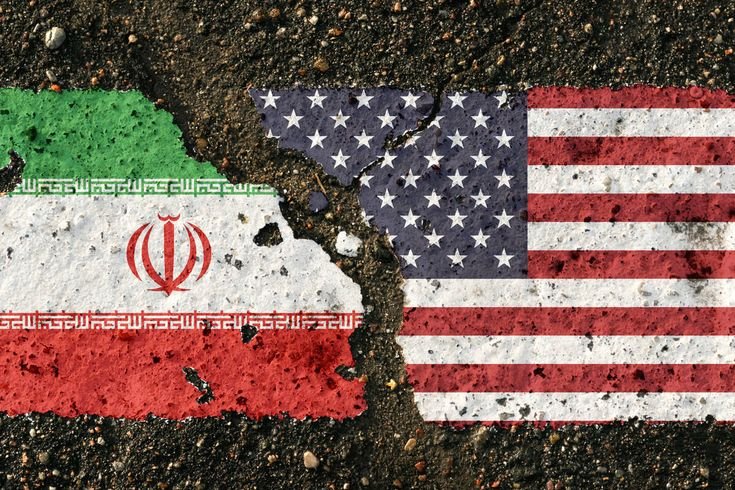
Araghchi has had a daunting task, trying to negotiate internal politics in Iran (between the government and the ever more dominant IRGC), trying to deal with deep societal distrust of the intentions of the U.S. (the U.S. had abandoned the nuclear deal in 2018), and trying to secure the least possible conditions in a situation of grave military asymmetry.
The major demands that Iran has are recognition of its right to enrich uranium, sanctions relief, freezing of its assets, reconstruction assistance and solution to all regional disputes, Lebanon being one of them. Araghchi has said that the ongoing negotiations are entering a critical, sensitive phase.
________________________________________
The Big Picture: What Next?
The two-week truce which started on April 8, 2026 is weak. The major fault lines are still:
On uranium enrichment: The U.S. demands a complete end to Iranian enrichment. Iran demands it to be a national right. This is by far the most hardest problem to solve.
On Lebanon: Iran and Pakistan declare that the ceasefire extends to Lebanon; Israel denies. Even hours after the ceasefire was declared, Israeli attacks on Lebanon were persisting, which risked breaking down the whole agreement.
On the Strait of Hormuz: Iran has lifted its temporary blockade on the waterway but has already re-imposed its blockade against Israeli moves in Lebanon; a graphic demonstration of how easily a situation can get out of hand.
On trust: There is a sea of distrust on both sides as one Al Jazeera source said they are entering negotiations with. The U.S. attacked Iran and Iranian officials have said that their level of trust is zero given that Iran was still negotiating with the U.S. on the nuclear issue.
And yet – the Islamabad negotiations are going on. The very fact that U.S. Vice President JD Vance and Iranian Foreign Minister Abbas Araghchi are seated facing each other (or at least, in the same building) reflects the first-time high-level face-to-face interaction between Washington and Tehran since the Islamic Revolution in 1979.
It will be clear in the days to come whether diplomacy is able to work where decades of hostility have failed.
Conclusion: Why This Moment Matters.
The history of this ceasefire is eventually a history of strength and constraints of diplomacy in the new era. It shows us that:
• Personal relationships matter. The relationship between Trump, Munir, and Vance formed an avenue that was not there previously.
• The improbable meddlers can create history. Pakistan – long regarded as a problem state – had to fill the vacuum and it did so by providing a ceasefire where the traditional great powers were unable.
• Reputation shapes diplomacy. Vance was acceptable to Iran owing to his anti-war credibility. Tehran could not do away with Araghchi due to his negotiating skills. The cross-bloc relationships that Munir had made him invaluable to all.
• Ceasefires are not terminations. The test is not the pause, but whether the discussions in Islamabad can bring about something more lasting, which will terminate a war which already has cost thousands of lives and hundreds of billions of economic destruction.
Islamabad is under the scrutiny of the world. And history is waiting.
Read Also: Venezuela US crisis
Sources & Further Reading
- Al Jazeera — “JD Vance Expects ‘Positive’ US-Iran War Talks as He Departs for Pakistan” (April 10, 2026)
- CNN — “How Vance is Navigating Peace Talks with Iran — and His Own Political Future” (April 10, 2026)
- PBS NewsHour — “Vance Warns Iran Not to ‘Play’ the U.S. as He Heads to Negotiations in Pakistan” (April 10, 2026)
- NPR — “Vance Heads to Pakistan for Talks to End the War Between Iran, the US and Israel” (April 10, 2026)
- Al Jazeera — “How Pakistan Managed to Get the US and Iran to a Ceasefire” (April 8, 2026)
- Dawn — “Trump Halts Iran Attacks After Talks with PM Shehbaz, CDF Munir” (April 8, 2026)
- The Jerusalem Post — “Iran’s Araghchi Seen as Country’s Most Powerful Foreign Minister Yet” (April 9, 2026)
- Abbas Araghchi — “By Hosting U.S.-Iran Talks, Pakistan Eyes an Unlikely Rebrand as Peace Broker” (April 9, 2026)
- Bloomberg — “Pakistan’s Mediation of US-Iran Ceasefire Shows Central Role in Global Politics” (April 8, 2026)
- Wikipedia — “2026 Iran War Ceasefire” (continuously updated)
- The Hill — “JD Vance Takes Center Stage in Faltering Iran Ceasefire” (April 9, 2026)
Christian Science Monitor — “For JD Vance, Iran Talks Are the Toughest Assignment of His Career” (April 10, 2026)