

What Is SEO?
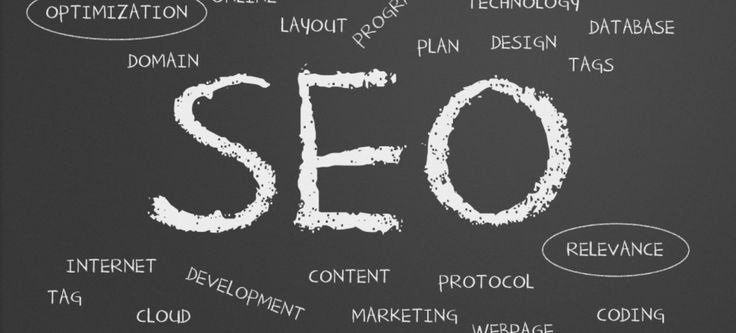
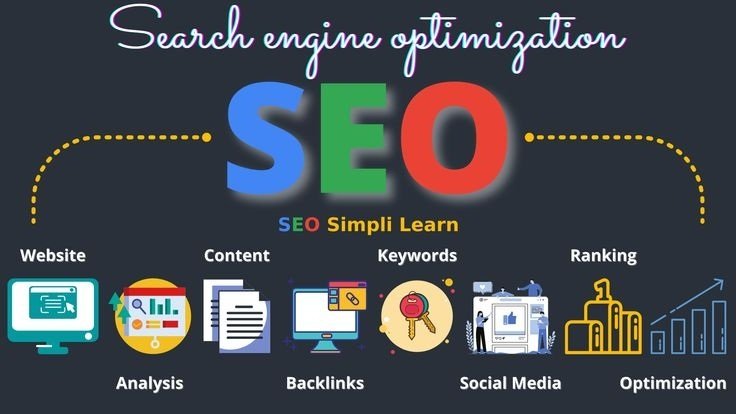
Search Engine Optimisation also referred to as SEO is the art of enhancing the quality of the content of websites, structure and authority of the websites in order to enhance visibility in the search engines such as Google. Search engines would strive to give the most relevant and reliable results whenever a person is searching information, products or services.
SEO aids search engines to comprehend your contents and whether or not you are fit to be ranked to specific queries. It is not a game of cheating algorithms but it is a matter of matching your web pages with what the users are actually interested in. The final objective of SEO is to generate the specified organic traffic that will translate into the readers, subscribers or customers.
Introduction to SEO in 2026
Search engine optimization is now one of the most significant digital business, blogger and online entrepreneurial strategies. By 2026 the art of SEO will not mean throwing keywords into an article or creating arbitrary back links. It has become an advanced system which merges the quality of the content, artificial intelligence, user experience and brand authority. Knowing what SEO means and its operation in the present world is critical to any person aiming to attain organic presence in the long term.
SEO is an actions of optimization of a web site in a way that makes it appear higher in the search results when the person types the appropriate queries. With your site in the first page, particularly at the upper part, it gets more clicks and stable traffic without having to pay to advertise. The latter renders SEO one of the most long-term digital marketing techniques.
What does SEO stand for?
SEO stands for Search Engine Optimization. It is the process of optimizing a website or online content so that it ranks higher in search engine results like Google. The goal is to increase organic (non-paid) traffic by making your content more visible and relevant to users.
How Search Engines Work
In order to comprehend the functioning of SEO in 2026, one should be familiar with the functioning of search engines. It operates in three main phases such as crawling, indexing, and ranking.
Crawling takes place when web robots search the web to identify new or revised web pages. These robots pay attention on the links and glean data concerning the content of websites, their design and their relevance. After the data collection is done, it is sent to the indexing stage. Indexing refers to the act of storing the content in a very big database such that it can be easily retrieved when one is searching.
Ranking is the final stage. When a user is typing a query, the algorithm weighs hundreds of signals to find out the most relevant and credible pages. The most appropriate pages are shown on the top of the search results.
The use of Artificial Intelligence in SEO.
The use of artificial intelligence is at the center of the functioning of SEO in 2026. Search engines do not entirely depend on the exact keywords matching. Rather they interpret context, intent and meaning. When a person is seeking tips on how to get more traffic to the site, the algorithm understands whether the user is a beginner, an expert, or is seeking recommendations on the use of a particular tool.
This change implies that material has to be holistic and contextual. It is not effective to repeat one keyword. Rather articles should be written in a way they make sense by including related terms, answering follow up questions and offering detailed descriptions. AI-based systems reward the content which is truly satisfying in intent.
Importance of Search Intent
The search intent is one of the most powerful ranking factors in 2026. Search engines attempt to provide the answer that is fitting to the intent of a query. There are information seekers, product compare users, and purchase ready users.
Your content will hardly rank high when it is not in line with the intent of the user. As an illustration, when one is searching to get a definition, then a page about the product sales will not meet them. Effective SEO plans critically look at intent, then develop content, so that every article has a purpose.
E-E-A -T and Content Credibility
E-E-A-T (Experience, Expertise, Authoritativeness, and Trustworthiness) is another significant trend in SEO in the year 2026. The search engines consider the content that shows actual knowledge and practical wisdom of a topic.
Sites with information that is detailed, well researched, and experience based have high chances of ranking higher. Credibility to authority is enhanced by the information about the authors, backlinks with reliable authorities, and stability in publication. Superficial or diluted content with no actual knowledge seldom does well.
Website Performance and Technical SEO.
Technical SEO takes care of the proper accessibility and comprehension of your web site by search engines. Website performance is important in rankings in 2026. Slow loading site or a site that is not mobile version can become unfamous in a short time.
Important are Core Web Vitals that are used to measure the speed of loading, interactivity, and visual stability. There should also be a secure connection through HTTPS. Technical enhancements might not have direct implications to the users, yet their establishment forms a solid basis that promotes the performance of the content.
The Power of Backlinks
The backlinks remain one of the strongest ranking signals. By reputable sites referring to your content, the search engines see this as a vote of confidence. Nevertheless, quality is much more important than quantity in 2026.
One or two good backlinks of reputable websites are worth more than dozens of bad quality links. The successful link-building strategies are concerned with creation of valuable content which inherently attracts references instead of applying the old tricks of manipulation.
Topical Authority and Content Clusters.
SEO in the modern days focuses on topical authority. Successful websites do not publish random articles but create groups of similar content on a central theme. A detailed guide serves as a pillar page and the supporting articles expound upon subtopics.
This organization is an indicator of experience, and the search engines can recognize that your site addresses a topic comprehensively. Internal connections between connected posts enhance the relevance and enhance positioning on various keywords.
Read Also : What Is Rationalism
The Future of SEO Beyond 2026
SEO is an ever-changing technology. The future of search is voice search, AI-generated summations, and the customization of search. Users desire quicker responses and more precise data.
The websites that will succeed in the future after 2026 have to be helpful, clear, and trustworthy. The brands that make genuine value delivery will be competitive, whereas those that use shortcuts will not be able to survive in the ever-shrewd search environment.
Conclusion
To arrive at the 2026 understanding of what SEO is and how it should work, it is important to realize that it has changed. SEO is already not a matter of easy optimization of the keywords. It is a holistic approach that incorporates the intent of the user, quality content, technical functionality and power generation.
When implemented correctly, SEO provides long-term organic growth and establishes strong online credibility. In 2026 and beyond, success in SEO belongs to those who focus on value, expertise, and delivering meaningful experiences to users.